Discover premium surfactants for various applications. Reliable export services, competitive prices, and high performance guaranteed.


PRODUCT PARAMETERS
Description
Overview of Stainless Steel Plate
A stainless steel plate is a flat sheet made from steel alloys containing chromium, offering enhanced resistance to corrosion, staining, and rust. Widely used in construction, manufacturing, and various industries for its durability, strength, and aesthetic qualities, stainless steel plates are essential materials for numerous applications.
Features of Stainless Steel Plate
Corrosion Resistance: High resistance to corrosion and rust, even in harsh environments.
Durability and Strength: Extremely durable with high tensile strength.
Temperature Resistance: Performs well under both high and low temperatures.
Hygienic Surface: Easy to clean and maintain, making it ideal for food and medical industries.
Aesthetic Appeal: Available in various finishes, enhancing architectural designs.
Recyclability: Environmentally friendly due to its recyclability and long lifespan.
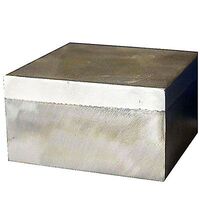
(17-4PH SUS630 1.4542 S17700 S17400 Precipitation-Hardening Stainless Steel plate)
Specifications of 17-4PH SUS630 1.4542 S17700 S17400 Precipitation-Hardening Stainless Steel plate
17-4PH SUS630 (1.4542/S17700/S17400) is a precipitation-hardening stainless steel plate known for balancing high strength, corrosion resistance, and durability. This material is widely used in demanding environments where mechanical performance and resistance to harsh conditions are critical. The steel plate is classified under martensitic precipitation-hardening stainless steels, offering versatility in applications ranging from aerospace to industrial machinery.
The chemical composition includes chromium (15-17.5%), nickel (3-5%), copper (3-5%), and small amounts of niobium/tantalum (0.15-0.45%). These elements enhance strength, toughness, and resistance to corrosion. Chromium provides a protective oxide layer, improving resistance to oxidation and acidic environments. Copper and niobium contribute to the hardening process during heat treatment.
Mechanical properties vary based on heat treatment conditions. In the solution-annealed state (Condition A), the plate has a tensile strength of approximately 1000-1100 MPa. After aging at 480-620°C (Condition H900), tensile strength increases to around 1310 MPa. Yield strength reaches up to 1170 MPa, with hardness levels of 40-45 HRC. The material maintains good ductility, with elongation values around 10-12% in treated conditions.
Heat treatment involves solution annealing followed by aging. Solution annealing is done at 1020-1060°C, followed by rapid cooling. Aging at specific temperatures (480-620°C) precipitates intermetallic phases, optimizing strength and hardness. The process allows customization of mechanical properties to meet application needs.
17-4PH stainless steel plates are used in aerospace components, turbine blades, chemical processing equipment, and medical instruments. They perform well in environments exposed to saltwater, acidic solutions, and high stress. The material’s weldability and machinability are better than many high-strength steels, though post-weld heat treatment is recommended to restore properties.
Advantages include high strength-to-weight ratio, resistance to stress corrosion cracking, and stability across temperatures from -40°C to 300°C. The steel is available in thicknesses from 0.5mm to 150mm, with surface finishes including hot-rolled, cold-rolled, and polished options. Compliance with standards like AMS 5643 and ASTM A693 ensures consistent quality.
Handling requires proper storage to prevent surface contamination. Cutting and machining should use tools designed for high-strength alloys to avoid work hardening. Regular inspection for surface defects is advised to maintain performance integrity.
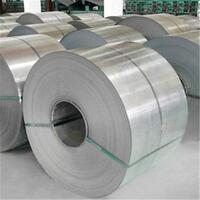
(17-4PH SUS630 1.4542 S17700 S17400 Precipitation-Hardening Stainless Steel plate)
Applications of 17-4PH SUS630 1.4542 S17700 S17400 Precipitation-Hardening Stainless Steel plate
17-4PH stainless steel plate is a high-performance material known for strength, corrosion resistance, and toughness. It is also called SUS630, 1.4542, S17700, or S17400 in different industry standards. This steel is heat-treated to increase its hardness and durability. It serves critical roles across multiple industries. The aerospace industry uses this steel for structural components like landing gear and engine parts. These parts require materials that handle extreme stress and temperature changes. The steel’s resistance to corrosion ensures reliability in harsh flight environments. Chemical processing plants rely on 17-4PH plates for equipment like reaction vessels and storage tanks. These applications involve exposure to aggressive chemicals. The steel resists damage from acids and other corrosive substances. Oil and gas operations use the material for valves, pumps, and drilling tools. These components operate under high pressure and corrosive conditions. The steel’s toughness reduces wear and extends service life in demanding settings. Medical devices made from 17-4PH plates include surgical instruments and implants. The material is biocompatible and safe for contact with human tissue. It withstands repeated sterilization without degrading. Marine engineering uses this steel for ship components and offshore platforms. Saltwater exposure demands high corrosion resistance. The steel performs well in humid or submerged environments. Industrial machinery employs 17-4PH plates for gears, shafts, and hydraulic systems. These parts endure heavy loads and friction. The steel’s strength prevents deformation under stress. Its machinability allows precise shaping during manufacturing. Weldability ensures ease of assembly in complex designs. The combination of properties makes 17-4PH stainless steel plate a versatile choice for high-stress applications. Industries value its ability to maintain performance over time. The material’s adaptability supports innovation in engineering and technology.
Company Introduction
Welcome to Wgraj, a premier global supplier of high-quality metal cladding solutions. We specialize in providing a wide range of metal cladding products, including aluminum, steel, and copper composites, designed to meet the diverse needs of architects, builders, and designers. Our commitment to innovation, durability, and aesthetic excellence ensures that our clients receive top-tier materials for their projects. With state-of-the-art manufacturing facilities and a dedication to customer satisfaction, we deliver reliable, cost-effective solutions worldwide. Partner with us for your metal cladding needs and experience unmatched quality and service.
If you have any questions, please feel free to contact us(nanotrun@yahoo.com).
Payment Methods
T/T, Western Union, Paypal, Credit Card etc.
Shipment Methods
By air, by sea, by express, as customers request.
5 FAQs of 17-4PH SUS630 1.4542 S17700 S17400 Precipitation-Hardening Stainless Steel plate
What is 17-4PH stainless steel plate?
17-4PH stainless steel plate is a type of precipitation-hardening steel. It contains chromium, nickel, copper, and niobium. The material is known for high strength, good corrosion resistance, and toughness. It is often used in environments requiring durability and reliability.
Where is 17-4PH stainless steel plate commonly used?
This steel is popular in aerospace, chemical processing, and medical equipment. It works well in parts like valves, shafts, and gears. The oil and gas industry uses it for components exposed to harsh conditions. Its ability to handle stress and corrosion makes it a top choice for many industrial applications.
What are the main advantages of 17-4PH stainless steel?
The steel offers high strength after heat treatment. It resists corrosion better than many standard stainless steels. It maintains good toughness even in extreme temperatures. The material is also easy to machine and weld in its annealed condition. These properties reduce production costs and improve efficiency.
How is 17-4PH stainless steel plate heat-treated?
Heat treatment involves heating the steel to around 1040°C, followed by rapid cooling. Aging is done at temperatures between 480°C and 620°C. This process forms precipitates that increase strength and hardness. Specific aging temperatures adjust final mechanical properties to meet different needs.
How does 17-4PH compare to other stainless steels like 304 or 316?
17-4PH has higher strength due to its precipitation-hardening ability. It outperforms 304 and 316 grades in wear resistance and load-bearing applications. While 304 and 316 excel in general corrosion resistance, 17-4PH is better for environments combining corrosion with mechanical stress. The choice depends on the application’s specific demands.
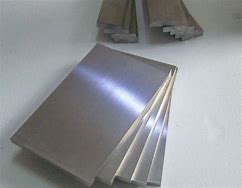
(17-4PH SUS630 1.4542 S17700 S17400 Precipitation-Hardening Stainless Steel plate)
REQUEST A QUOTE
RELATED PRODUCTS
Astm Aisi 409l 410 420 430 440c Stainless Steel Plate/sheet/coil/strip 301 304 316 321
Quality 201 202 304 316 430 2205 2507 904L Stainless Steel Plate
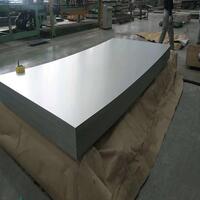
ASTM A312 Tp316l 88 9 3 05 3 Sch10s House Stainless Steel Plate with Surface Automobile Finish Welding Decoration
Custom Stainless Steel Dinner Plate Metal Round Dinner Dishes for Adults Reusable Serving Camping Salad Plate for Home Snack BBQ